
Name-Based Case Searches
Utah Courts XChange searches public case histories. It covers District and Justice Court records stored in CORIS. Start with the last name or the company field for a first pass. A common name calls for more filters. Add a first name, Duchesne County scope, court level, case type, and a date range to cut the noise. An asterisk in the first-name field catches variations and middle-initial versions. Note that it can widen the result set.
- Choose District Court, Justice Court, or both as the jurisdiction.
- Enter the last name or company, then add the first name when known.
- Narrow the scope to Duchesne County or a known court location.
- Add case type and filing or disposition dates only when reliable.
- Review the county, location, case type, filing date, and party role before opening the case.
| Field Label | Type | Required | Notes |
|---|---|---|---|
| Last name/Company | Text | Optional | Use for a person or organization search. |
| First Name | Text | Optional | An asterisk can return name variations. |
| Search Scope | Select | Optional | Statewide, county, or a court location. |
| Case Type | Select | Optional | Choose an official court case category. |
| Date Range Panel | Date controls | Optional | Filing, disposition, judgment, or judgment disposition. |
Duchesne County XChange Search Scope
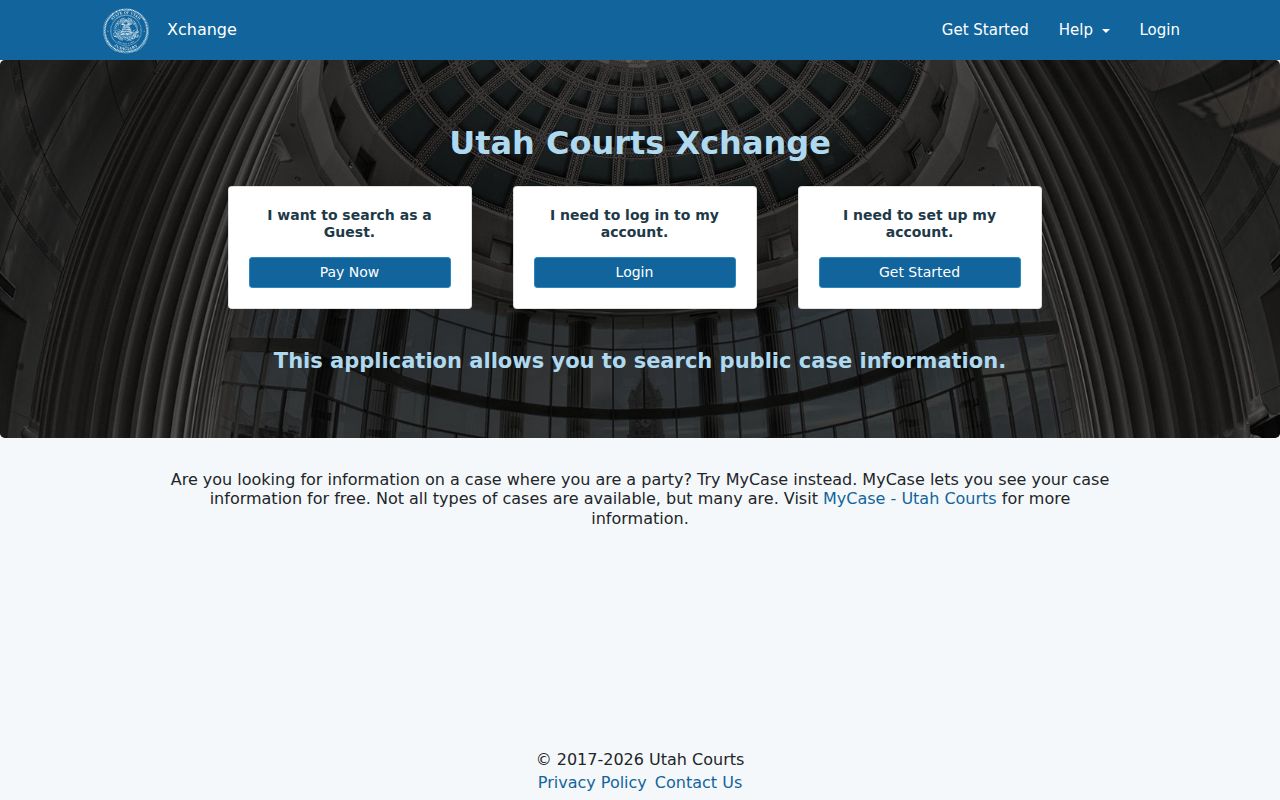
XChange holds public case data from every Utah District Court and Justice Court. In Duchesne County that means the District Court locations in Duchesne and Roosevelt. It also includes the Duchesne County Justice Court. Court staff enter the data into CORIS first. The state says each entry reaches XChange after it lands in the local court system. So recent filings may lag. None of this promises that every paper or image is online. The XChange entry page offers public guest and account sign-in. That official site is the statewide doorway into local case histories.
The Duchesne County government public-access page is no substitute for a docket search. It holds commission minutes, ordinances, and resolutions. State court dockets are not there. Juvenile Court runs through a separate restricted route of its own. For a public District or Justice case, begin at XChange. Turn to the right clerk only if the record is unavailable there.
Case Number Searches
Nothing beats an exact number. XChange's sample uses an eight or nine digit numeric format like 085502036, where the first two digits mark the filing year and the rest reflects the court's case coding and sequence. Utah warns that case numbers are not unique statewide. So pair the digits with Duchesne County and the court location instead of trusting the number alone. A citation number works differently. It is not unique statewide either, and it should travel with its issuing location. Core accepts a citation or court case number for a Justice Court payment search, but that tool only checks for an account with money due. It does not return the extended docket. A brand-new citation may not appear yet, since the county payment material says citations generally take about five days to be filed, and manually filed ones can take longer. Wait, then confirm with the issuing court.
Duchesne County Court Search Choices
Court level is a search filter that matters. Felonies, class A misdemeanors, larger civil matters, domestic cases, and probate belong in District Court. Class B and C misdemeanors and infractions go to Justice Court. Traffic, local ordinances, and small claims sit there too. Juvenile delinquency and child-welfare files take the Juvenile Court route. Those never appear in public XChange results.
| Search Choice | Use It For | Limit |
|---|---|---|
| District Court | Felony, major civil, domestic, probate | Choose Duchesne or Roosevelt location when known. |
| Justice Court | Traffic, infraction, lower misdemeanor, small claims | Older converted cases may have less detail. |
| Both | Uncertain court level | May create a broader billable result set. |
| Juvenile route | Authorized youth-record requests | Not a public XChange search. |
Justice Court is not a court of record. An appeal from its judgment goes to District Court for a fresh hearing or trial. Because of that, related activity can show up at two levels in one search. Do not treat two similar rows as the same proceeding right away. Compare court location, case type, and filing date.
Case Search Results Explained
Think of the first result row as an index. It names the county, court location, case type, case number, filing date, and party name with role, plus links to case history or documents. XChange caps results at 500. A common name can hit that ceiling fast. When it does, add the known county, court, case type, or date rather than repeating the same broad billable search.
| Case Number | The numeric identifier; the first two digits indicate filing year. |
|---|---|
| Style / Parties | The caption and coded party roles, such as PLA, DEF, PET, or RES. |
| Case Type | The official category, including civil, criminal, probate, domestic, or traffic codes. |
| Filed Date | The date the court opened the case in its records. |
| Status | The current recorded state or completed-case outcome when public. |
The extended case history holds the chronology. It can show the court, caption, type, assigned judge, parties, attorneys, charges, document due dates, accounts, minute entries, proceedings, and disposition. A single result row explains none of that. It cannot tell you why a hearing moved or what an order says.
Duchesne County Case Search Labels
Document access comes in three states. “Purchase” means an electronic public image can be bought. “Available” may show for authorized government users. A missing document link simply means the public history can exist without an online image. XChange charges $1 per available document no matter the page count, and that purchase is not a certified copy.
Case history: The public summary or extended chronology for a case.
Proceeding: A dated event line in the history.
Minute entry: The clerk's record of a hearing or procedural event.
Disposition: The recorded resolution, which must be read with its order and date.
Need a missing image, plain copy, or certified record? Contact the court that holds the file. Inspecting a public court record is free. A written Utah Judiciary Request for a Record may be required, and it should name the case, the specific document, and the copy type you want. The state says courts usually respond within ten business days. For urgent hearing information, use the calendar or telephone route.
Two Ways to Search: County and State
Utah offers no separate Duchesne-only full docket database. XChange is the statewide system, but its scope controls can narrow a docket search to Duchesne County or one local court. For records the statewide interface cannot supply, the local clerical counter is the county-level route.
| Statewide Portal | Duchesne County Route |
|---|---|
| XChange searches participating District and Justice Court CORIS data. | The Duchesne, Roosevelt, or Justice Court clerk checks the file held there. |
| Useful for a public name, number, case-type, or statewide search. | Useful for older files, unavailable images, certified copies, and record requests. |
| Searches and documents can carry portal charges. | Inspection is free; copies, certification, and staff time may carry court fees. |
Start at the District Court clerical counter. Ask whether a public XChange terminal is on hand. The phone works too. Dial 435-264-4700 for Duchesne, 435-722-0235 for Roosevelt, or 435-738-0109 for the Justice Court. A written request mailed to the court location is another option when the public portal fails. None of these routes is a separate commercial docket search.
Duchesne County Search Portal Differences
MyCourtCase serves parties and authorized users at no charge. Their case history, filed papers, payment accounts, linked cases, and notices all sit in one place. It does not replace XChange for the general public. Citation searches and court-case payment accounts run through XChange, while Utah Court Calendars handles hearing settings. Each tool answers a different docket question. eFlex stands apart from all of them. It is the account-based filing service for attorneys and authorized filers in Utah District Court, and the official eFlex source shows the authenticated entry point where those filers sign in to submit papers.
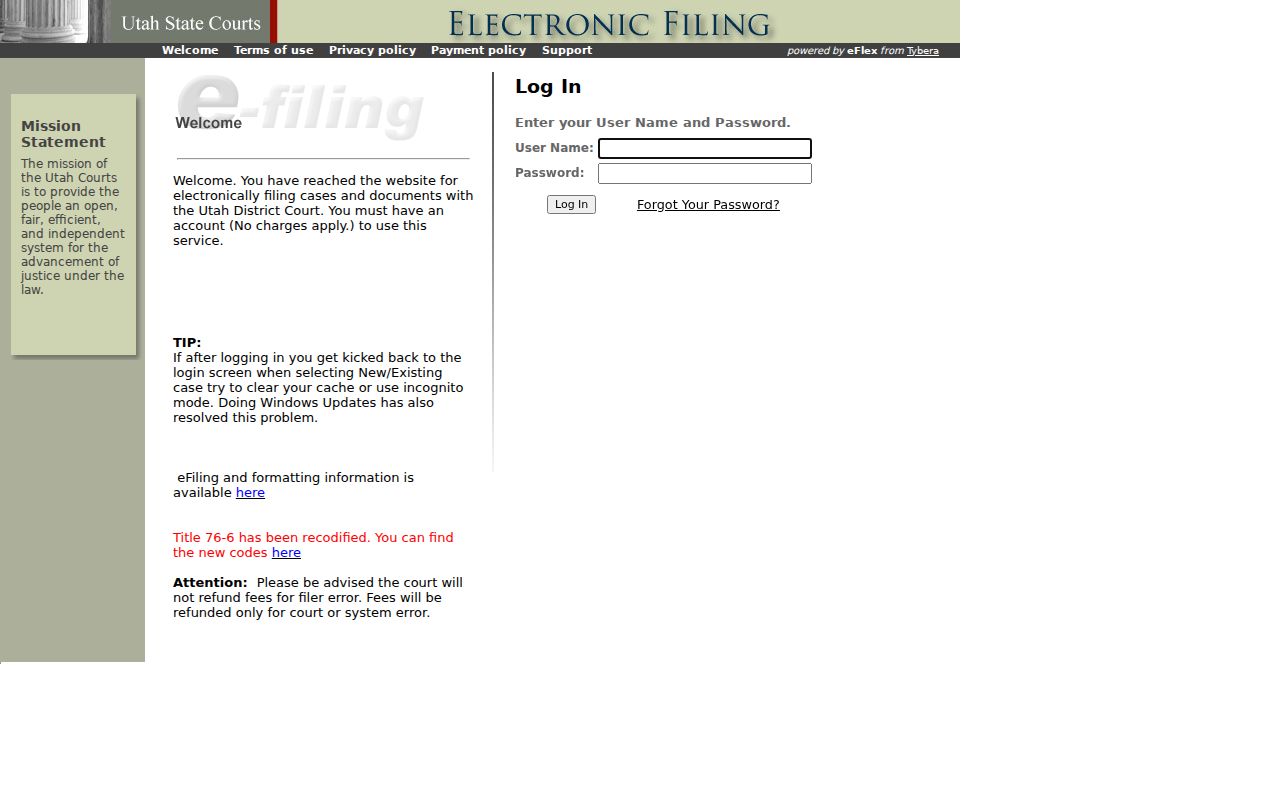
That login is not a case lookup for the public. Documents filed there may show up in XChange later. But eFlex itself is not a public docket. Hearing dates belong on the Duchesne County court schedule. For the filing sequence and public documents, go back to XChange or the court clerk.
Duchesne County Older Docket Searches
Most Utah District Courts were on CORIS by the end of 1998. Justice Courts came aboard at different times. Each one chose how much old material to carry over. So a missing older Justice Court history may just reflect conversion coverage. It may not be a sealed court record. The Justice Court clerk can tell you whether a matter was converted. The clerk can also say where the original record lives. The Eighth District dates to 1988. Utah State Archives holds descriptions of older minute books, docket books, registers of actions, and judgment books. Records more than 50 years old may have moved there. Search the archival guides by agency, series, and record type. A modern XChange name query will not surface every historic case. Knowing that keeps genealogy and local-history work honest.
Which Cases Stay Restricted
Utah court records are presumed public under UCJA Rule 4-202.02. That presumption holds unless a rule, law, or court order marks them private, protected, controlled, safeguarded, sealed, or otherwise restricted. XChange leaves out sealed adoptions and civil commitments, expunged cases, juvenile delinquency, child-welfare matters, and terminations. Domestic filings are often private. Even then, the case history, an order, a judgment, or a hearing minute stays public. A "not found" result can also mean the case is not yet entered, sits in another court, or predates conversion. Ask the right clerk, but do not ask staff to disclose restricted facts. Anyone with a valid basis for access can file a written request under UCJA Rules 4-202.03 and 4-202.04. That request explains the authorization. Juvenile records go to the Juvenile Court clerk or victim coordinator under Utah Code section 78A-6-209. No public search gets around those protections.